
The short answer: No.
The long answer: Absolutely not.
Shut it down. Right now.
A cracked heat exchanger is not a minor repair issue. It is not a “fix it next month” problem. It is an immediate safety hazard. In the HVAC world, this is a red tag event.
Here is why.
The Heart of Your Furnace
Think of the heat exchanger as a lung.
It breathes in fire. It breathes out heat.
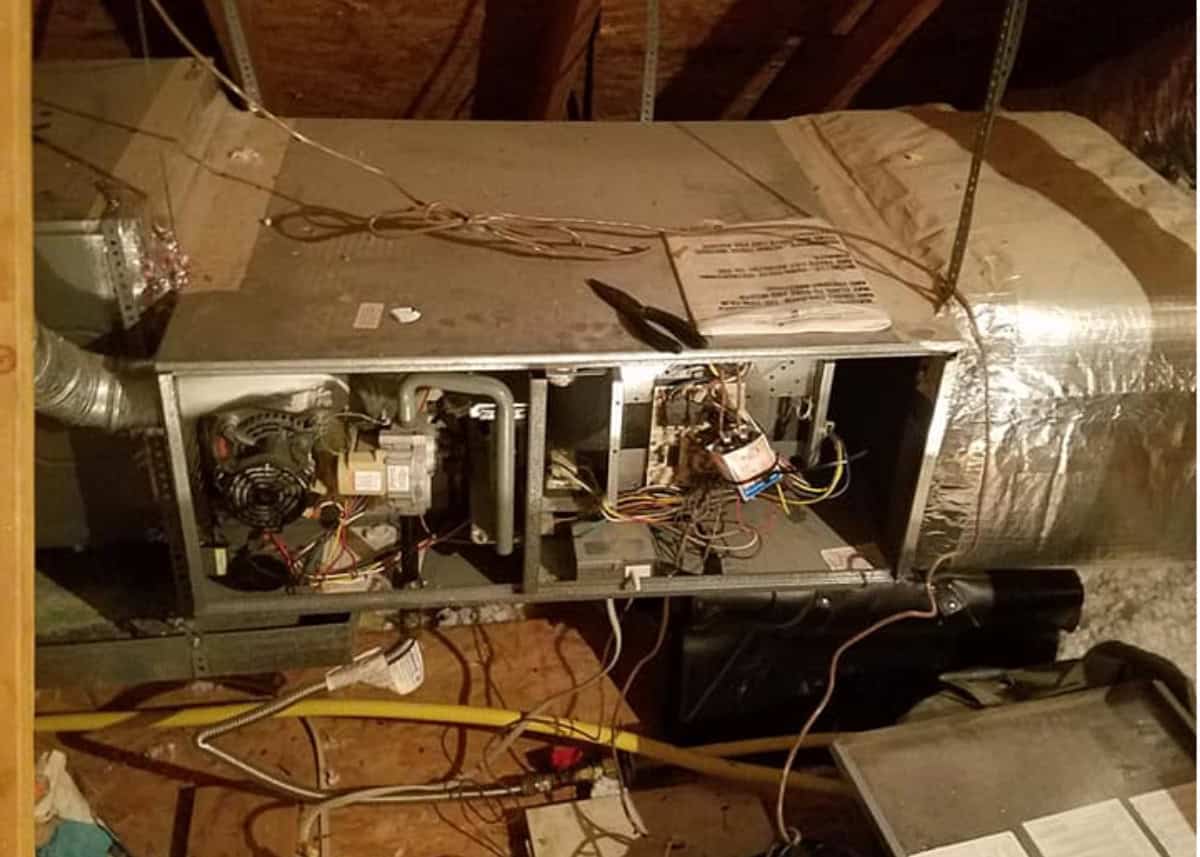
Technically, it is a metal chamber. Inside, fuel burns. Propane. Natural gas. The combustion creates intense heat. Toxic gases form. Carbon monoxide. Nitrogen dioxide. Water vapor.
The heat exchanger keeps these poisons contained. It separates the breathable air in your home from the deadly exhaust in the furnace.
It is a shield. A barrier.
When the Shield Breaks
Metal expands when hot. It contracts when cold.
In Dallas-Fort Worth, our weather is erratic. Freezing nights. Mild afternoons. Your furnace cycles constantly.
Expand. Contract. Expand. Contract.
Over time, the metal fatigues. Stress points form. Eventually, it cracks.
When that crack opens, the barrier fails.
The blower fan pushes air over the exchanger. The crack widens. Toxic gases escape the chamber. They mix with your indoor air. They enter your vents. They fill your bedrooms.
This is the danger.
The Carbon Monoxide Threat
You cannot see it. You cannot smell it. You cannot taste it.
Carbon Monoxide (CO) is the “Silent Killer.”
A cracked heat exchanger leaks CO. Even small amounts cause headaches. Dizziness. Nausea.
High amounts are fatal.
Running a furnace with a crack is playing Russian Roulette. You are betting your family’s safety against a piece of failing metal.
Don’t take that bet.
Signs of Trouble
How do you know? A crack isn’t always visible to the naked eye. However, your furnace gives clues.
- Soot Build-up: Black powder inside the furnace cabinet.
- The Flame: It should be blue. A steady blue. If it is yellow? If it flickers? That is a warning. Oxygen is leaking.
- Water: Puddles at the base of the furnace. (Combustion creates water; a crack lets it leak).
- Smells: A pungent odor. Like formaldehyde.
- Physical Symptoms: The flu that isn’t the flu. Your family feels sick at home. Better at work. Sick again at home.
Repair or Replace?
This is the hard truth.
You usually cannot patch a heat exchanger. Welding acts as a band-aid. It is temporary. It is unsafe. Most codes prohibit it.
You have two options:
- Replace the component. Expensive. Labor-intensive. If the unit is old, it’s rarely worth it.
- Replace the furnace. The safer investment. New warranty. Higher efficiency. Peace of mind.
The DFW Factor
Our winters in the Metroplex are short but sharp.
We rely on gas furnaces heavily for those few freezing weeks. Older homes in Rockwall, Forney, and Dallas often have older units. They are tired. They are stressed.
Do not ignore the signs.
If a technician tells you the exchanger is cracked, believe them. Ask for photos. See the proof. Then, make the safe choice.
Shut it off.
Keep Your Home Safe This Winter
Unsure about your system? Don’t guess with gas.
Bolton Heating & Air serves the entire DFW Metroplex. We detect the cracks others miss. We prioritize your safety over a quick sale.
If you suspect a leak, or if your system is acting up, call us immediately.